Noah Smith has a mostly excellent analysis of this decade’s trend of rising interest rates. He ends up sounding pretty uncertain, but that seems to be due to a desire to find a single cause, when it’s obvious to me that there are three causes.
The TIPS spread clearly supports the conclusion that rising rates from the spring of 2020 through early 2022 were due to increased inflation expectations. The Fed made a big mistake in misjudging how economies react to pandemic-induced unemployment. Now that the Fed is back to making much smaller mistakes, inflation expectations aren’t changing much.
This chart of government credit risk makes a pretty clear case that increased risk of a US government default was a big driver of rising rates in 2022 and 2023:
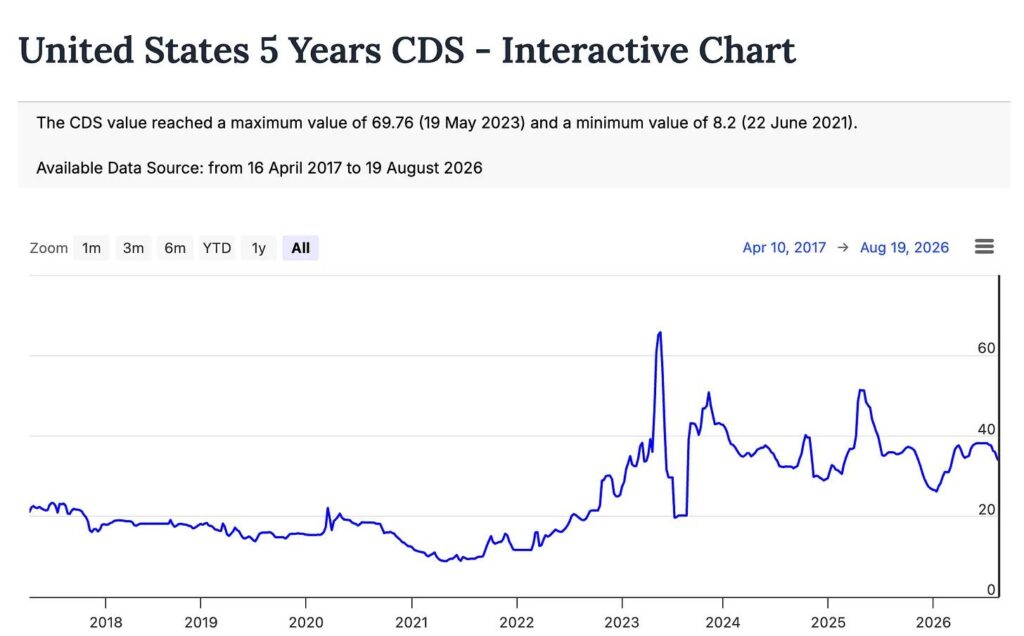
For 2024 through 2026 we don’t have a simple chart to confirm an hypothesis, but everything I see seems consistent with the belief that rates are rising due to AI-related demand for capital. There’s a perfectly clear theory that says we ought to see increased real interest rates as a result of the current and projected massive AI datacenter spending. The stable credit default swaps and rising stock market suggest that increasingly robust economic growth is stabilizing market concerns about the government’s credit risk and the government’s pressure to create more inflation.
Recent reports have said that Treasury Secretary Bessent is trying to suppress long-term interest rates. That strategy makes sense if current AI spending is a bubble that will soon collapse. Whereas it’s counterproductive if AI is causing a sustained increase in demand for capital. I’m betting heavily against Bessent.