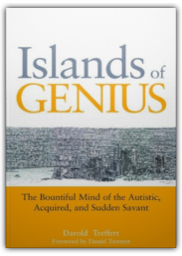
 Islands of Genius: The Bountiful Mind of the Autistic, Acquired, and Sudden Savant
Darold A. Treffert
Islands of Genius: The Bountiful Mind of the Autistic, Acquired, and Sudden Savant
Darold A. Treffert

Savant syndrome is a rare condition in which individuals with developmental disorders, including autism spectrum disorders, have one or more areas of expertise, ability, or brilliance - "islands of genius" - that exist in contrast with their overall limitations. In this fascinating book, Dr. Darold Treffert looks at what we know about this remarkable condition, and at new discoveries that raise interesting questions about the hidden brain potential within us all. Dr. Treffert explores the phenomena of genetic memory - instances in which individuals somehow "know" things they never learned - and sudden genius or "acquired savantism" - where a neuro-typical person unexpectedly and spectacularly develops savant-like abilities following a head injury or stroke. Showing that these phenomena point convincingly towards a reservoir of untapped potential - an inner savant capacity - within us all, he looks both at how savant skills can be nurtured, and how they can help the person who has them, particularly if that person is on the autism spectrum. A central colour section contains the extraordinary artwork of some of the savants who are mentioned in the book. "Islands of Genius" will intrigue anyone who has ever wondered what makes the mind of a savant tick, as well as clinicians, parents, teachers, therapists, and others who care for, and about, individuals with savant syndrome. 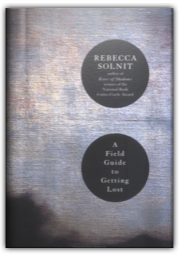 A Field Guide to Getting Lost
Rebecca Solnit
A Field Guide to Getting Lost
Rebecca Solnit
With such acclaimed books as River of Shadows and Wanderlust, activist and cultural historian Rebecca Solnit has emerged as one of the most original and penetrating writers at work today. Her brilliant new book, A Field Guide to Getting Lost, is about the stories we use to navigate our way through the world and the places we traverse, from wilderness to cities, in finding ourselves or losing ourselves. Written as a series of autobiographical essays, it draws on emblematic moments and relationships in Solnit’s own life to explore issues of uncertainty, trust, loss, memory, desire, and place. While deeply personal, Solnit’s book is not just a memoir, since her own stories link up with everything from the captivity narratives of early American immigrants to endangered species to the use of the color blue in Renaissance painting—not to mention encounters with tortoises, monks, punk rockers, mountains, deserts, and the movie Vertigo. The result is a distinctive, stimulating voyage of discovery that only a writer of Solnit’s caliber and curiosity could produce, a book that will appeal not only to her growing legion of admirers but also to the readers of Anne Lamott, Diane Ackerman, and Annie Dillard. 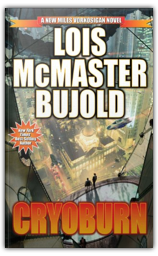 Cryoburn
Lois McMaster Bujold
Cryoburn
Lois McMaster Bujold
Kibou-daini is a planet obsessed with cheating death. All well and good, so long as they kept to themselves. But now the Kibou-daini are attempting to franchise out their Fountain of Youth wares to the rest of the galaxy and the Barrayar Galactic Empire is none too pleased with the implications.  Catching Fire
Suzanne Collins
Catching Fire
Suzanne Collins
Against all odds, Katniss Everdeen has won the annual Hunger Games with fellow district tribute Peeta Mellark. But it was a victory won by defiance of the Capitol and their harsh rules. Katniss and Peeta should be happy. After all, they have just won for themselves and their families a life of safety and plenty. But there are rumors of rebellion among the subjects, and Katniss and Peeta, to their horror, are the faces of that rebellion. The Capitol is angry. The Capitol wants revenge. 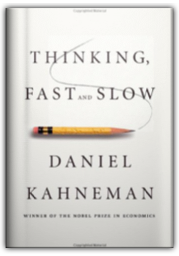 Thinking, Fast and Slow
Daniel Kahneman
Thinking, Fast and Slow
Daniel Kahneman
A New York Times Top 10 Book for 2011 A Globe and Mail Best Books of the Year 2011 Title One of The Economist’s 2011 Books of the Year One of The Wall Steet Journal's Best Nonfiction Books of the Year 2011 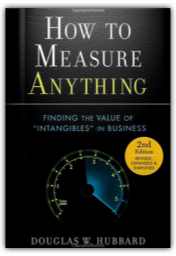 How to Measure Anything: Finding the Value of Intangibles in Business
Douglas W. Hubbard
How to Measure Anything: Finding the Value of Intangibles in Business
Douglas W. Hubbard
Anything can be measured. This bold assertion is the key to solving many problems in business and life in general. The myth that certain things can't be measured is a significant drain on our nation's economy, public welfare, the environment, and even national security. In fact, the chances are good that some part of your life or your professional responsibilities is greatly harmed by a lack of measurement-by you, your firm, or even your government.Building up from simple concepts to illustrate the hands-on yet intuitively easy application of advanced statistical techniques, How to Measure Anything reveals the power of measurement in our understanding of business and the world at large. This insightful and engaging book shows you how to measure those things in your business that until now you may have considered "immeasurable," including technology ROI, organizational flexibility, customer satisfaction, and technology risk. Offering examples that will get you to attempt measurements-even when it seems impossible-this book provides you with the substantive steps for measuring anything, especially uncertainty and risk.Don't wait-listen to this book and find out:-The three reasons why things may seem immeasurable but are not-Inspirational examples of where seemingly impossible measurements were resolved with surprisingly simple methods-How computing the value of information will show that you probably have been measuring all the wrong things-How not to measure risk-Methods for measuring "soft" things like happiness, satisfaction, quality, and more-How to fine-tune human judges to be powerful, calibrated measurement instruments-How you can use the Internet as an instrument of measurementA complete resource with case studies, How to Measure Anything illustrates how author Douglas Hubbard-creator of Applied Information Economics-has used his approach across various industries. You'll learn how any problem, no matter how difficult, ill-defined, or uncertain, can lend itself to measurement using proven methods. Straightforward and easy-to-follow, this is the resource you'll refer to again and again-beyond measure. 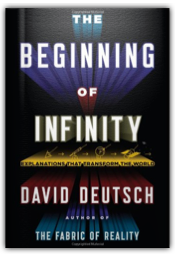 The Beginning of Infinity: Explanations That Transform the World
David Deutsch
The Beginning of Infinity: Explanations That Transform the World
David Deutsch
Selected by The New York Times Book Review as a Notable Book of the YearA bold and all-embracing exploration of the nature and progress of knowledge from one of today's great thinkers. 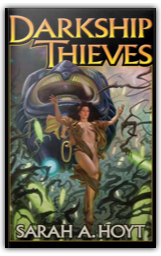 Darkship Thieves
Sarah A. Hoyt
Darkship Thieves
Sarah A. Hoyt
Athena Hera Sinistra never wanted to go to space. Never wanted see the eerie glow of the Powerpods. Never wanted to visit Circum Terra. Never had any interest in finding out the truth about the DarkShips. You always get what you don’t ask for. Which must have been why she woke up in the dark of shipnight, within the greater night of space in her father’s space cruiser, knowing that there was a stranger in her room. In a short time, after taking out the stranger—who turned out to be one of her father’s bodyguards up to no good, she was hurtling away from the ship in a lifeboat to get help. But what she got instead would be the adventure of a lifetime—if she managed to survive. . . . 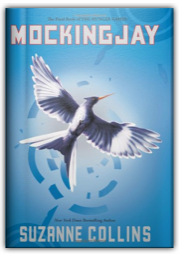 Mockingjay
Suzanne Collins
Mockingjay
Suzanne Collins
Against all odds, Katniss Everdeen has survived the Hunger Games twice. But now that she's made it out of the bloody arena alive, she's still not safe. The Capitol is angry. The Capitol wants revenge. Who do they think should pay for the unrest? Katniss. And what's worse, President Snow has made it clear that no one else is safe either. Not Katniss's family, not her friends, not the people of District 12. Powerful and haunting, this thrilling final installment of Suzanne Collins's groundbreaking The Hunger Games trilogy promises to be one of the most talked about books of the year. 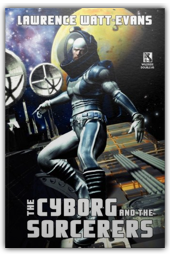 The Cyborg and the Sorcerers/The Wizard and the War Machine
Lawrence Watt-Evans
The Cyborg and the Sorcerers/The Wizard and the War Machine
Lawrence Watt-Evans
In the tradition of the old "Ace Doubles" two-in-one books (flip one over to read the second title) — here is the fifth Wildside Double: the two-volume "War Surplus" series by Lawrence Watt-Evans, "The Cyborg and the Sorcerers" and "The Wizard and the War Machine." 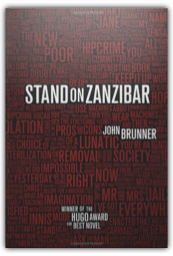 Stand on Zanzibar
John Brunner
Stand on Zanzibar
John Brunner
Norman Niblock House is a rising executive at General Technics, one of a few all-powerful corporations. His work is leading General Technics to the forefront of global domination, both in the marketplace and politically—-it's about to take over a country in Africa. Donald Hogan is his roommate, a seemingly sheepish bookworm. But Hogan is a spy, and he's about to discover a breakthrough in genetic engineering that will change the world...and kill him. These two men's lives weave through one of science fiction's most praised novels. Written in a way that echoes John Dos Passos' U.S.A. Trilogy, Stand on Zanzibar is a cross-section of a world overpopulated by the billions. Where society is squeezed into hive-living madness by god-like mega computers, mass-marketed psychedelic drugs, and mundane uses of genetic engineering. Though written in 1968, it speaks of 2010, and is frighteningly prescient and intensely powerful. 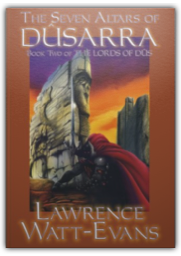 The Seven Altars of Dusarra
Lawrence Watt-Evans
The Seven Altars of Dusarra
Lawrence Watt-Evans
Garth of Ordunin had been set a new task by the Forgotten King: Bring back to Skelleth whatever he found upon the altars of the seven temples of Dusarra. As he went about his blasphemous errand he learned more about the Dark Gods — and more about his own destiny! |
 Made with Delicious Library
Mountain View, CA zipflap congrotus delicious library McCluskey, Peter