 Wired for War: The Robotics Revolution and Conflict in the 21st Century
P. W. Singer
Wired for War: The Robotics Revolution and Conflict in the 21st Century
P. W. Singer


A military expert reveals how science fiction is fast becoming reality on the battlefield, changing not just how wars are fought, but also the politics, economics, laws, and ethics that surround war itself  The Wizard Lord
Lawrence Watt-Evans
The Wizard Lord
Lawrence Watt-Evans

The Wizard Lord’s duty is to keep the world in its delicate balance. He must govern lightly to protect his domain from power-hungry interlopers, such as certain wizards who previously fought to rule the world…But if the Wizard Lord himself strays from the way of the just, then it is up to the Chosen to intercede.  Night of Madness
Lawrence Watt-Evans
Night of Madness
Lawrence Watt-Evans
Warlockry has been rare in Ethshar . . . until The Night of Madness, when a mysterious object falls from the heavens, sending out a wave of magic in the form of a dream. All who have the dream awaken in panic. But some of them also awaken to the power or Warlockry. 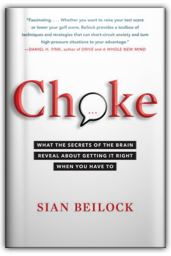 Choke: What the Secrets of the Brain Reveal About Getting It Right When You Have To
Sian Beilock
Choke: What the Secrets of the Brain Reveal About Getting It Right When You Have To
Sian Beilock
Why do the smartest students often do poorly on standardized tests?Why did you tank that interview or miss that golf swing when you should have had it in the bag?Why do you mess up when it matters the most—and how can you perform your best instead?It happens to all of us. You’ve prepared for days, weeks, even years for the big day when you will finally show your stuff—in academics, in your career, in sports—but when the big moment arrives, nothing seems to work. You hit the wrong note, drop the ball, get stumped by a simple question. In other words, you choke. It’s not fun to think about, but now there’s good news: This doesn’t have to happen.Dr. Sian Beilock, an expert on performance and brain science, reveals in Choke the astonishing new science of why we all too often blunder when the stakes are high. What happens in our brain and body when we experience the dreaded performance anxiety? And what are we doing differently when everything magically "clicks" into place and the perfect golf swing, tricky test problem, or high-pressure business pitch becomes easy? In an energetic tour of the latest brain science, with surprising insights on every page, Beilock explains the inescapable links between body and mind; reveals the surprising similarities among the ways performers, students, athletes, and business people choke; and shows how to succeed brilliantly when it matters most. In lively prose and accessibly rendered science, Beilock examines how attention and working memory guide human performance, how experience and practice and brain development interact to create our abilities, and how stress affects all these factors. She sheds new light on counter-intuitive realities, like why the highest performing people are most susceptible to choking under pressure, why we may learn foreign languages best when we’re not paying attention, why early childhood athletic training can backfire, and how our emotions can make us both smarter and dumber. All these fascinating findings about academic, athletic, and creative intelligence come together in Beilock’s new ideas about performance under pressure—and her secrets to never choking again. Whether you’re at the Olympics, in the boardroom, or taking the SAT, Beilock’s clear, prescriptive guidance shows how to remain cool under pressure—the key to performing well when everything’s on the line. 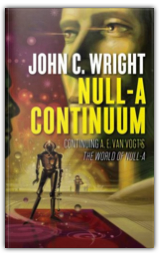 Null-A Continuum
John C. Wright
Null-A Continuum
John C. Wright
Continuing A.E. van Vogt’s World of Null-A  Shining Steel
Lawrence Watt-Evans
Shining Steel
Lawrence Watt-Evans
When John Mercy-of-Christ's soldiers ran up against weapons like none they had ever seen before, John's campaign to defeat the enemies of The True Word and Flesh came to a sudden halt. Once guns that could only come from Old Earth arrived, the doctrinal differences between his sect and the Chosen of the Holy Ghost had to be put to one side-for what other abominations might be in store? If the starships of Earth were to battle the swords of Godsworld, John was ready for that war. But what he wasn't ready for was just how much the new war was going to change him.  Taking Flight
Watt-Evans, Lawrence
Taking Flight
Watt-Evans, Lawrence
She was everything he wanted, and everything he had been promised. 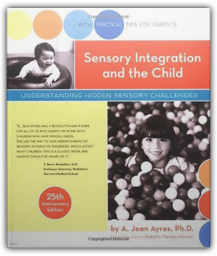 Sensory Integration and the Child: 25th Anniversary Edition
A. Jean Ayres
Sensory Integration and the Child: 25th Anniversary Edition
A. Jean Ayres
This classic handbook, from the originator of sensory integration theory, is now available in an updated, parent-friendly edition. Retaining all the features that made the original edition so popular with both parents and professionals, "Sensory Integration and the Child" remains the best book on the subject. With a new foreward by Dr. Florence Clark and commentaries by recognized experts in sensory integration, this volume explains sensory integrative dysfunction, how to recognize it, and what to do about it. Helpful tips, checklists, question-and-answer sections, and parent resources make the new edition more informative and useful. Indispensible reading for parents, this book is also an excellent way to improve communication between therapist, parents and teachers. The original edition was the first book to explicate sensory integrative dysfunction, and this edition offers new insights and helpful updates in an easy-to-use format. Dr. A. Jean Ayres began to develop sensory integration theory, as well as the evaluation procedures and intervention strategies that were associated with this framework, in the 1950s. When the book "Sensory Integration and Child" was first published in the late 1970s, many aspects of her work were becoming more widely known. Although she was a dedicated researcher and educator, Dr. Ayres was foremost a therapist who worked tirelessly to help the children and families who to her therapy clinic. Over and over again, she listened to the frustration parents expressed at not understanding their children's behavior, often followed by relief at having those problems named and explained, and hope when a plan for intervention was offered. Dr. Ayres wrote this book in order to bring a similar sense of relief and hope to families beyond those who were able to come to her clinic. Because she recognized that parents commonly went first to doctors, therapists, and teachers for help with the developmental or educational concerns they had about their children, she also wrote this book to help those professionals assist families as well. Part 1: Sensory Integration and the Brain Chapter 1: What Is Sensory Integration? An Introduction to the Concept Chapter 2: Watching Sensory Integration Develop: The Development of Sensory Integration From Infancy to Middle Childhood Chapter 3:The Nervous System Within: Understanding How the Brain Works and the Importance of Sensation Part 2: Sensory Integrative Dysfunction Chapter 4: What Is Sensory Integrative Dysfunction? Symptoms, Causes, and Levels Chapter 5: Disorders Involving the Vestibular System: The Sense of Movement and How It Influences the Development of Many Skills Chapter 6: Developmental Dyspraxia: The Process of Learning New Motor Skills and Why This Is Hard for Some Children Chapter 7: Tactile Defensiveness: The Sense of Touch and Why Some Children Are More Sensitive Than Others Chapter 8: Visual Perception and Auditory-Language Disorders: The Perception of Sight and Sound and Its Relationship to Learning and Language Chapter 9: The Child With Autism: Understanding the Special Sensory Integration Needs and Challenges Associated With This Diagnosis Part 3: What Can Be Done About the Problem Chapter 10: Assessment and Intervention: How Therapy Using a Sensory Integration Approach Can Help Chapter 11: What Parents Can Do: How Parents Can Help Their Children With Sensory Integrative Dysfunction Appendix A: Chapter Commentaries Appendix B: Literature Reviews Appendix C: Therapeutic Equipment Appendix D: Some Questions Parents Ask- and the Answers 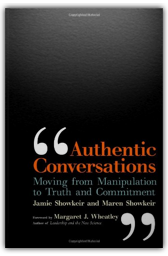 Authentic Conversations: Moving from Manipulation to Truth and Commitment
Jamie Showkeir, Maren Showkeir
Authentic Conversations: Moving from Manipulation to Truth and Commitment
Jamie Showkeir, Maren Showkeir
Talk Does Matter! 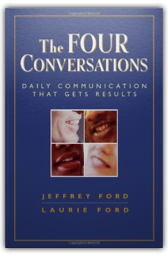 The Four Conversations: Daily Communication That Gets Results
Jeffrey Ford, Laurie Ford
The Four Conversations: Daily Communication That Gets Results
Jeffrey Ford, Laurie Ford
Making Everyday Talk Work  Bonds That Make Us Free: Healing Our Relationships, Coming to Ourselves
C. Terry Warner
Bonds That Make Us Free: Healing Our Relationships, Coming to Ourselves
C. Terry Warner
Life can be sweet. Our relationships with friends, spouses, colleagues, and family members can be wonderfully rewarding. They can also bring heartache, frustration, anxiety, and anger. We all know the difference between times when we feel open, generous, and at ease with people versus times when we are guarded, defensive, and on edge. 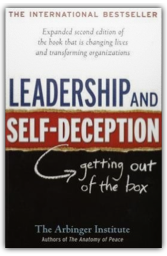 Leadership and Self-Deception: Getting out of the Box
Arbinger Institute
Leadership and Self-Deception: Getting out of the Box
Arbinger Institute
Since it’s original publication nine years ago, Leadership and Self-Deception has become an international word-of-mouth phenomenon. Rather than tapering off, it has sold more copies each year since 2004 than it did in any of the first four years after publication. The book’s central insight—that the key to leadership lays not in what we do, but in who we are—has proved to have powerful resonances not only for organizational leadership, but in readers’ personal lives as well. Leadership and Self-Deception uses an entertaining story about an executive facing challenges at work and at home to expose the precise psychological processes that conceal our true motivations and intentions from us and trap us in a “box” of endless self-justification. Most importantly, the book shows us the way out. |
 Made with Delicious Library
Mountain View, CA zipflap congrotus delicious library McCluskey, Peter